A screenshot is not a payment
How to check a MoMo payment is real before you hand over the item, how fake alerts and reversal tricks work, and how to report them.
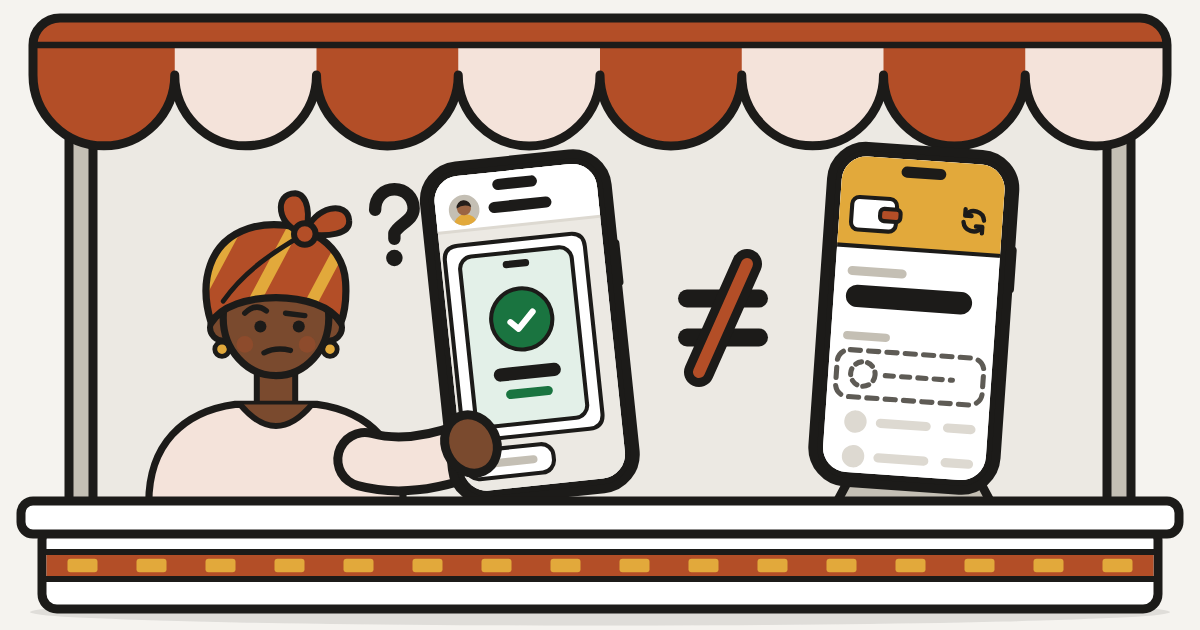
A MoMo payment is real only when you can see the money in your own wallet. Before you hand over an item, open your MoMo app or dial *170# on MTN, enter your PIN yourself, and check your balance or the transaction itself. A screenshot, a forwarded text or even an alert in your own inbox proves nothing on its own, because each one can be faked.
That sounds obvious until a rider is waiting, the buyer keeps saying the money has gone through, and three other chats need answers. This guide covers the checks to make, how the common tricks work, and what to do if one catches you.
Screenshots became the receipt, and fraudsters noticed
Selling on social media in Ghana runs on screenshots. In a MyJoyOnline column in October 2026, Raphael Beinamwin described how Instagram, WhatsApp and MoMo became the shop, and put the habit in five words: “The screenshot became the receipt.”
A screenshot is a picture, and pictures can be edited. Dr Genevieve Sedalo of the University of Professional Studies, Accra, wrote in May 2026 that “fake payment alerts, doctored screenshots, and reversed transactions have caught many traders off guard”, one of the reasons she gave for businesses quietly returning to cash.
The cases are real. In April 2026 a food vendor at the University of Ghana said a student had been buying food and drinks from her since 2025 with fake MoMo payment alerts. She played along, checked, found that no payment had arrived, and he was arrested, YEN reported. In July 2026 Citi Newsroom reported that some market traders now verify MoMo transactions before handing over goods. One trader, Madam Anointed, said: “They complete the transaction, but it does not reflect in your account.” Her answer: “When that happens, I no longer accept MoMo transactions.”
The Bank of Ghana’s 2025 fraud report shows how much the problem has grown. Fraud cases reported by payment service providers, which include the MoMo companies, went from 15,673 in 2024 to 24,124 in 2025, and the value at risk went from GH¢19m to GH¢37m, according to TechLabari’s summary of the report. Those figures cover every kind of fraud at those providers. Nobody publishes a separate count of fake alerts.
How the three common tricks work
The fake alert
Say a buyer orders a GH¢250 bag, then sends a screenshot of a MoMo transfer, or a text that looks like a MoMo credit, and asks you to send the rider. The picture was made on their phone. Nothing has reached your wallet, and if you only look at what they sent, you can’t tell.
The fake can even land in your own inbox. In January 2025 MyJoyOnline told the story of Ella, who got a message saying she had received GH¢780. She checked first: “I checked my MoMo account balance which apparently was empty.” MTN’s own fraud menu lists “Fake SMS” as one of the frauds you can report.
The “wrong transfer” call
The fake alert is often the first half of a second trick. Within minutes of Ella’s message, the calls started. The same article describes the usual script: the caller says the money went into your account by mistake and pushes you to send the “excess” back, or to give your details, or threatens to block you. Ella later got a message saying her number had been blocked. MTN’s fraud menu lists “Fake Blocking” among the frauds you can report. If you send the “mistake” back, you pay the caller with your own money, because the first payment never existed.
The reversal after delivery
The third trick starts with a real payment. The buyer pays, takes the item, then asks for the money back as if it went to the wrong number. MyJoyOnline described this reversal fraud in January 2026 as customers who “make payments, collect goods and later reverse the transaction”. One business owner said: “Sometimes a customer will come and buy something and then call MTN to retrieve the money.”
MTN’s self-initiated reversal shows how such a request reaches you. The sender dials *170#, chooses My Wallet, then Reversal, and picks the transaction. You get a prompt asking you to approve it. If you approve, the money goes back automatically. If you don’t, MTN says it will “hold the money in their wallet and begin the normal reversal process”.
Checks to make before you hand over the item
- Look at your own wallet, on your own phone. Open the MoMo app or your network’s MoMo menu (*170# on MTN) and check the balance or the latest transactions yourself. A buyer showing you their phone proves nothing.
- Match the amount. The money in your wallet should be the full price of the order. A part payment is a part payment, whatever the screenshot says.
- Treat every message as a picture until the wallet agrees. A screenshot, a WhatsApp forward and a text in your inbox can all be made to look like MoMo. The wallet is the only record that counts.
- Give anyone who sells for you the same rule. If a sibling or a helper takes orders while you’re away, they check the wallet too, or they wait for you.
- Slow down when you’re rushed. Eric Cab-Beyuo, who heads fraud investigations at the Bank of Ghana, said of MoMo fraudsters: “They just play on our minds.” A waiting rider and a buyer in a hurry are the pressure they rely on.
- Never send money back because of a call. If someone says they sent you money by mistake, check your balance first. If the money really is there, an MTN sender can request a reversal and you’ll get a prompt. There’s no need to send anything yourself.
- Don’t approve a reversal for a sale you made. If a reversal prompt arrives for money a buyer paid for goods, decline it. Keep the chat, the order and any proof of delivery as your record of the sale.
- Keep your PIN to yourself. MTN tells customers its official number is 0244300000 and not to discuss their MoMo wallet with callers from strange numbers.
What to do if it happens
On an MTN wallet, report it from the MoMo menu. MTN’s help centre gives the route:
- Dial *170#.
- Choose 6, “My Wallet”.
- Choose 4, “Report Fraud”.
- Pick the type: “Wrong transfer”, “New Reversal process”, “Fake SMS”, “Fake Blocking” or “Fake promotions”.
- Follow the prompts to enter the details.
You can also email MTN’s fraud team at mmfraudteam.GH@mtn.com. Menus change from time to time, so read each screen before you choose. On Telecel Cash or AirtelTigo Money, contact your network’s customer care.
Report the scam to the Cyber Security Authority as well. Its November 2025 alert lists three ways: call or text 292, WhatsApp 0501603111, or email report@csa.gov.gh. If you lost goods to someone you can identify, go to the police too.
Write everything down while it’s fresh: the buyer’s number, the chat, the amount, the time, and whatever they sent you. Their screenshot is worthless as proof of payment and useful as evidence of fraud.
How MeKiosk handles this
On MeKiosk, buyers pay through your kiosk link. They pick what they want, give their name and number, and approve a MoMo prompt on their own phone: MTN MoMo, Telecel Cash or AirtelTigo Money. They don’t need an app or an account. If the prompt doesn’t come, they can pay on Paystack’s own page instead.
An order turns Paid only when Paystack confirms the money, never from a screenshot or a text. You get an alert with the buyer’s name and the order code, so you know who paid without asking anyone to prove it. Items are held for 15 minutes while the buyer pays, so nothing sells twice.
Your share goes to your own MoMo wallet the next working day, and weekend sales arrive on Monday. MeKiosk doesn’t hold the buyer’s money until delivery. For anything you sell outside MeKiosk, the checks above still apply.
MeKiosk is opening soon in Accra with 30 founding kiosks; if you’d like one, join the waitlist.
Sources
- How do I report Mobile Money (MoMo) fraud? · MTN Ghana Help Centre, 19 Sep 2023
- Self-Initiated MoMo Reversal · MTN Ghana Help Centre, 27 Jul 2025
- How do I keep my MoMo wallet Safe? · MTN Ghana Help Centre, 5 Nov 2021
- The E-commerce revolution Ghana built for itself · MyJoyOnline, 27 Oct 2026
- Why Ghanaian businesses are quietly returning to cash · MyJoyOnline, 18 May 2026
- University of Ghana Student Arrested for Allegedly Using Fake Payment Alerts to Buy Food · YEN.com.gh, 16 Apr 2026
- Ghanaian traders count losses as counterfeit cedi notes, fake MoMo alerts surge · Citi Newsroom, 14 Jul 2026
- Mobile Money Fraud Surges in Ghana as Digital Payments Outpace Security · TechLabari, 8 Jul 2026
- Fraudsters undermining public trust in Mobile money payment systems · MyJoyOnline, 17 Jan 2025
- Some businesses reject Mobile Money payments as MoMo fraud cases rise · MyJoyOnline, 14 Jan 2026
- The fraudsters don't use hacking, they play on our minds – BoG's Cab-Beyuo on Mobile Money Fraud · MyJoyOnline, 9 Jul 2026
- Online shopping scam – Black Friday deals · Cyber Security Authority, 28 Nov 2025