What MoMo costs a seller after the e-levy
The e-levy ended in April 2025. What taking MoMo still costs a small online seller in Ghana, who should pay it, and how to price for it.
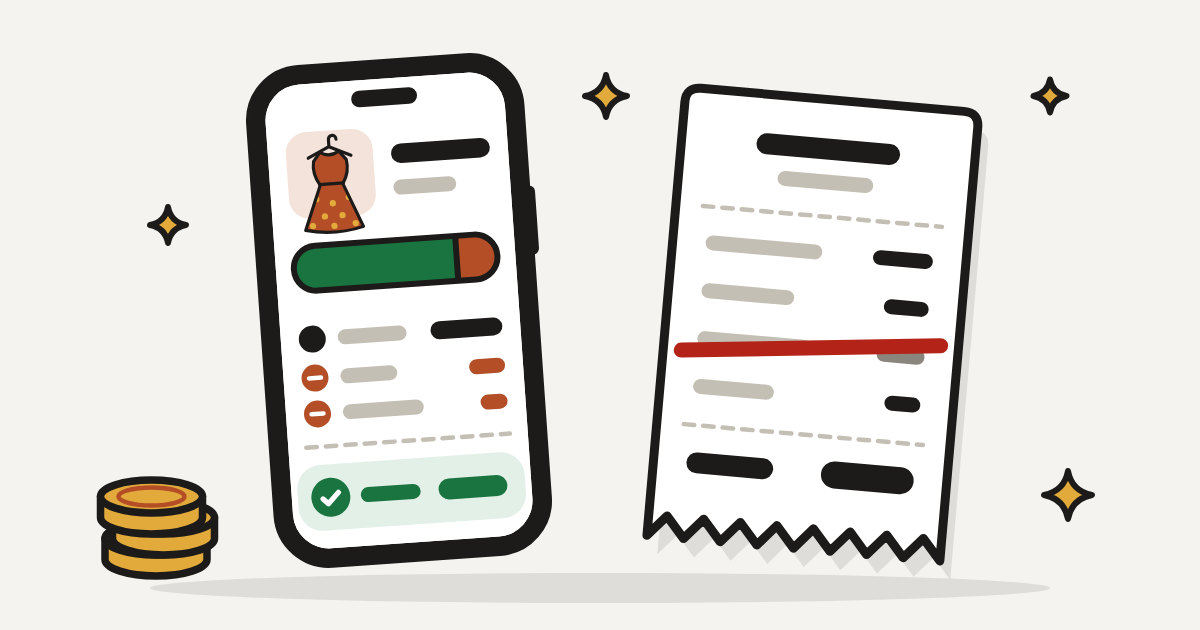
Since 2 April 2025 there has been no e-levy on MoMo transfers. What’s left for a small online seller in Ghana is fees: your network’s own charges, such as cashing out, and a checkout fee if buyers pay through a payment page, which is 1.95% on Paystack. Who pays them is your choice, as long as the buyer knows before they pay: build the fees into your price, or show them openly next to it.
The rest of this guide covers what changed, which fees still apply, why “add charges” upsets buyers, and how to price so fees don’t eat your margin.
The e-levy ended in April 2025
The e-levy was a 1% charge on electronic money transfers. The Electronic Transfer Levy (Repeal) Act, 2025 (Act 1128) abolished it with effect from 2 April 2025. The Ghana Revenue Authority told banks and telcos to stop charging it from midnight on all their channels, and to refund anything deducted after that.
MTN’s help centre answered the obvious next question, whether MoMo fees still apply: “Regular mobile money service fees still apply.” The tax went. The networks’ own fees stayed.
MTN’s MoMo-to-bank fee was paused in May 2026
On 25 May 2026, MTN texted customers that from 1 June 2026, transfers from a MoMo wallet to a bank account would cost 0.75% per transaction, capped at GH¢5. That included moving money to your own bank account, which had been free.
The next day, the Bank of Ghana directed Mobile Money Fintech Limited, the company behind MTN MoMo, to suspend the fee, saying changes to charges should be “introduced fairly”. MyJoyOnline reported the pause as pending further consultations. By 29 May, TechLabari said there had been no further update on whether it would go ahead.
We found no announcement since then that the fee has started. If you move sales money from MoMo to a bank, check the current charge with MTN before you plan around it.
Your network still charges its own fees
When MTN announced the bank-transfer fee, Graphic Online reported that wallet-to-wallet transfers and agent cash-in and cash-out “remain subject to their existing separate charges”.
We couldn’t find a current official fee table for MTN MoMo, Telecel Cash or AirtelTigo Money, so this guide doesn’t print percentages for them. Check what applies to your own wallet today:
- MTN MoMo: the MoMo app, MTN’s MoMo menu on *170#, or MTN’s website and customer care.
- Telecel Cash and AirtelTigo Money: the network’s app or website, or its customer care.
Then work out your real cost per sale. Add up what you paid in a typical week to cash out or move money, and divide it by the number of sales you made that week. That one figure tells you how much each sale really costs you to collect.
Payment pages charge a checkout fee
When a buyer pays through a payment page or link instead of sending money to your number, the payment company takes a fee. Paystack’s Ghana pricing page lists 1.95% for local transactions, mobile money included, and settles the money the next working day. Other payment companies set their own rates, so read their pricing page before you choose one.
One detail matters when you pass that fee on. Paystack works out its 1.95% on everything the customer pays. Its own calculator shows a customer paying GH¢50: Paystack keeps GH¢0.98 and settles GH¢49.02.
Surprise charges are what buyers resent
In a Citi Newsroom piece from August 2026, Patricia Boakye describes a habit she says is common among small vendors: just before you confirm a payment, you’re told “Add GH¢1 for MoMo.” She writes that convenience then “begins to feel like a punishment”, and argues vendors should use a proper merchant service instead of making each customer cover their transaction costs.
The seller’s side is just as real. A business owner told MyJoyOnline in January 2026 that they had stopped taking MoMo “because some customers don’t add the charges”, and that “whenever I go and cash out, they take charges”. Dr Genevieve Sedalo of UPSA, writing about businesses returning to cash, describes every transaction trimming “already thin margins”.
In both stories the trouble is timing. The buyer has agreed a price, then meets a new number at the moment of paying. Some pay and feel cheated. Some refuse, and the seller swallows the cost. A fee the buyer sees before they agree avoids both.
Two honest ways to price for fees
Pick one and use it for every buyer.
Build the fee into your price
Say you want to keep GH¢180 from a dress, and your buyers pay through a checkout that takes 1.95% of what they pay. Adding 1.95% of GH¢180, which is GH¢3.51, leaves you a little short, because the fee is charged on that GH¢3.51 too. Divide instead:
- GH¢180 ÷ 0.9805 = GH¢183.58
- 1.95% of GH¢183.58 is GH¢3.58
- GH¢183.58 minus GH¢3.58 leaves you GH¢180.00
You can round up to a clean price such as GH¢185. For network fees, add the cost per sale you worked out above. The buyer sees one price and never hears the word “charges”.
Show the fee openly
Write the fee in cedis next to the price wherever buyers first see it, and send the total in the chat before you ask for payment. Charge everyone the same fee, and keep it to the real cost, so it never looks like extra profit.
Mistakes that cost you buyers
- Asking for charges after the buyer has agreed the price.
- Different fees for different buyers.
- Assuming last year’s fees still hold. Networks do propose new fees, as May 2026 showed, so check yours every few months.
How MeKiosk handles fees
Opening a kiosk is free, with no monthly bill. MeKiosk takes 1% of each paid order, VAT included, and founding kiosks pay no MeKiosk fee for their first 3 months. The buyer pays Paystack’s Mobile Money fee, 1.95%, on top of your price, and sees it before paying, so you don’t have to ask the buyer to add charges.
Here is a GH¢180.00 order:
| Your kiosk | Founding kiosk, first 3 months | |
|---|---|---|
| Your price | GH¢180.00 | GH¢180.00 |
| MoMo fee, paid by the buyer | GH¢3.58 | GH¢3.58 |
| The buyer pays | GH¢183.58 | GH¢183.58 |
| MeKiosk fee | GH¢1.80 | GH¢0.00 |
| You receive | GH¢178.20 | GH¢180.00 |
Your share goes to your own MoMo wallet the next working day, and weekend sales arrive on Monday. The pricing page has the full breakdown.
MeKiosk is opening soon in Accra with 30 founding kiosks; to be one of them, join the waitlist at mekiosk.store/waitlist.
Sources
- Ghana's Parliament amends tax laws following the 2025 budget statement presentation · EY, 9 Apr 2025
- GRA directs banks and telcos to stop 1% tax on MoMo and transfers · Graphic Online, 3 Apr 2025
- E-Levy Removed – Here's What It Means for You · MTN Ghana Help Center, 7 Apr 2025
- MTN MoMo to bank transfers will attract charges from June 1, 2026 · Graphic Online, 25 May 2026
- Bank of Ghana suspends proposed MTN MoMo-to-bank transfer fee · Graphic Online, 26 May 2026
- BoG suspends implementation of 0.75% wallet to bank transfer fee · MyJoyOnline, 26 May 2026
- Ghana's MoMo Fee Controversy: What You Need To Know · TechLabari, 29 May 2026
- How do I report Mobile Money (MoMo) fraud? · MTN Ghana Help Center, 19 Sep 2023
- Pricing (Ghana) · Paystack, undated, read 2 Nov 2026
- 'Add charges': The agony of MoMo users · Citi Newsroom, 10 Aug 2026
- Some businesses reject Mobile Money payments as MoMo fraud cases rise · MyJoyOnline, 14 Jan 2026
- Why Ghanaian businesses are quietly returning to cash · MyJoyOnline, 18 May 2026